The Savills Blog

Industrial Park Management: Choosing The Right Partner

The strong growth in foreign direct investment (FDI) is driving greater demand for industrial space, alongside rising expectations for operational quality across industrial parks. This places greater demands on developers to manage technical infrastructure, control maintenance costs, reduce incident response times and improve the use of operational data. Effective operations not only help meet occupiers’ expectations but also support long-term competitiveness and preserve asset value.

This article explores the key challenges of industrial park management, compares in-house operations with outsourcing, outlines the criteria for selecting a reliable management partner and shares Savills’ specialist insights.

KEY TAKEAWAYS
1 Industrial park management encompasses infrastructure operations, security and cleanliness, cost control, tenant coordination and clearly defined responsibilities.
2 The choice between in-house management and outsourcing depends on the industrial park's scale, operational complexity and internal capabilities.
3 Management providers should be assessed on their experience, technical expertise, operating procedures, data systems and ability to support occupiers.
4 Management contracts should clearly define the scope of services, KPIs and SLAs, approval authority, costs and data handover procedures.

1. WHAT IS INDUSTRIAL PARK MANAGEMENT AND WHAT DOES IT COVER?

Industrial park management involves organising and overseeing technical operations, security, environmental management and support services to ensure that shared infrastructure and occupier areas operate safely and reliably. These responsibilities are typically undertaken directly by the industrial park owner or delegated to a professional management operator, and cover the following areas:

1.1. Infrastructure Operations and Maintenance

Objective: To ensure the reliable and safe operation of infrastructure and technical systems, extend equipment lifespan, optimise maintenance costs and minimise the risk of disrupting occupiers' production activities.

  • Manage, inspect and maintain technical systems regularly, including electrical, water supply, heating, ventilation and air conditioning (HVAC), and fire prevention and firefighting systems.
  • Monitor and operate clean water supply systems and centralised wastewater treatment facilities.
  • Inspect and maintain internal roads to ensure safe and convenient movement and goods transportation.
  • Monitor equipment condition, identify potential faults at an early stage, and proactively plan maintenance and repairs.
  • Ensure that technical systems and infrastructure operate reliably and safely, minimising incidents that could disrupt production.

1.2. Asset and Equipment Management

Objective: To monitor asset condition, utilisation and lifecycle costs, ensuring that operational equipment performs efficiently and meets the industrial park's operational requirements.

  • Inventory, classify and update asset records, including technical equipment, operational machinery, tools and shared assets.
  • Monitor the operating condition, frequency of use, and repair and maintenance history of each item of equipment.
  • Develop regular inspection and maintenance schedules to identify early signs of wear or damage and reduce unexpected repair costs.
  • Plan equipment repairs, upgrades or replacements based on actual condition, service life and operational effectiveness.
  • Manage asset investment and maintenance budgets, prioritising essential items to optimise long-term costs.

1.3. Energy Management and Sustainability

Objective: To optimise energy consumption, control operating costs and reduce environmental impact, while helping the industrial park meet increasingly demanding sustainability and Environmental, Social and Governance (ESG) requirements.

  • Monitor, record and analyse electricity, water and other energy consumption; identify areas with high consumption or potential for savings.
  • Recommend measures to improve energy efficiency and optimise shared lighting, cooling and technical systems.
  • Assess the feasibility of and advise on renewable energy solutions, such as solar power systems, in line with the industrial park's infrastructure and requirements.
  • Monitor resource consumption and emissions indicators, and establish phased targets for improving energy efficiency.
  • Support the owner in developing environmental management procedures, collecting data and preparing reports to meet ESG objectives or occupier requirements.

1.4. Industrial Cleaning and Waste Management

Objective: To maintain a clean, safe and well-organised working environment, ensure that waste collection, segregation and disposal comply with applicable regulations, and enhance the industrial park's image and environmental quality.

  • Organise and supervise cleaning across shared areas, internal roads, toilets, landscaped areas and waste collection points.
  • Establish routine cleaning schedules, inspect service quality and ensure that shared areas remain clean and well maintained.
  • Coordinate the collection, segregation and transfer of domestic, industrial and other specialised waste in accordance with applicable regulations.
  • Monitor waste storage conditions, maintain clean waste collection points and prevent potential soil, water or air pollution.
  • Monitor compliance with environmental management procedures and support the implementation of relevant standards, such as ISO 14001, where required.
  • Recommend waste reduction, reuse and recycling measures to improve resource management efficiency.

1.5. Security, Safety and Access Control

Objective: To protect people, assets and production activities within the industrial park, proactively prevent security threats, fire and explosion risks, and occupational safety incidents, and maintain a safe and uninterrupted operating environment for occupiers.

  • Organise security personnel, patrols and 24/7 surveillance in key areas, controlling the entry and exit of people, vehicles and goods.
  • Operate and inspect CCTV surveillance, access control systems and other security equipment within the agreed scope of responsibility.
  • Develop emergency response procedures for incidents such as fires, explosions, accidents, security breaches and technical failures; coordinate drills and review response plans regularly.
  • Inspect safety conditions in shared areas, emergency exits and fire prevention and firefighting systems; coordinate with occupiers to address emerging risks in accordance with each party's responsibilities.
  • Advise on improvements to occupational safety, the use of personal protective equipment and risk prevention measures in production areas, within the scope of services provided.
  • Support the owner in reviewing appropriate insurance requirements, such as property, fire and explosion, and public liability insurance, and coordinate with insurers or specialist advisers where necessary.

1.6. Investor and Occupier Support

Objective: To enhance the occupier experience, reduce service response times and help businesses prepare their premises for operation more efficiently, while contributing to occupancy retention and stronger occupier loyalty.

  • Establish a central point of contact to receive, classify and address occupier service requests, feedback and complaints; track progress and ensure responses meet agreed timeframes.
  • Coordinate with occupiers during premises acceptance and handover, inspect site conditions and confirm that technical requirements are met before use.
  • Support connections to and integration with technical systems, including electricity, water and telecommunications, in accordance with the available infrastructure, service agreements and applicable regulations.
  • Guide occupiers on operational procedures and requirements relating to security, safety, environmental management and the use of shared industrial park facilities.
  • Coordinate with relevant departments to support administrative procedures, access registration, contractor registration and other operational requirements where necessary.
  • Regularly collect feedback and assess occupier satisfaction, recommending improvements to service quality.
  • Maintain communication channels and coordination mechanisms between the owner, management operator and occupiers to address issues affecting production activities promptly.

One of the most important aspects of industrial park management is clearly defining the responsibilities of the owner, management operator and occupiers. Responsibility boundaries should be specified for each area, including shared infrastructure, technical systems, internal factory premises, equipment independently installed by occupiers, repair costs and approval authority.

SAVILLS | PROPERTY MANAGEMENT

Tailored Operational Solutions for Every Industrial Park

From operational consultancy to professional on-site management, Savills supports industrial park owners with solutions tailored to each project's needs and available resources.

01

Consultancy Services

Industrial Park Operational Consultancy

Ideal for projects with an existing in-house management team seeking to improve their operational model. Savills helps review technical systems and infrastructure, assess budgets, develop standard operating procedures (SOPs) and key performance indicators (KPIs), and provide team training.

Explore Consultancy Services

02

Management Services

Industrial Park Management and Operations

Designed for projects without an existing management team or those seeking to outsource operations. Savills' dedicated team provides on-site management and operational services in accordance with agreed key performance indicators (KPIs), service-level agreements (SLAs) and scope of work.

Explore Management Services

2. SHOULD INDUSTRIAL PARK OWNERS MANAGE OPERATIONS IN-HOUSE OR OUTSOURCE TO A PROFESSIONAL OPERATOR?

After defining the scope of work, industrial park owners need to choose an appropriate operating model: managing operations with an in-house team or engaging a professional operator. This decision affects not only staffing structures but also long-term costs, service quality, risk management and the occupier experience. No single model is suitable for every industrial park; the optimal choice depends on the project's scale, infrastructure complexity and the owner's actual operational management capabilities.

2.1. In-house Management: Suitable When Established Teams and Processes Are in Place

In-house management allows owners to retain direct control over operational decisions, data, costs and occupier relationships. This approach is suitable for industrial parks of a moderate scale with relatively stable operations, where the owner already has technical, security and service teams supported by clearly defined operating procedures.

However, to maintain operational efficiency over the long term, owners need to ensure they have the necessary capabilities in several key areas:

  • Staffing: Recruiting, training and retaining technical personnel with experience in industrial infrastructure operations.
  • Scalability: Maintaining consistent service quality as the industrial park expands, develops additional infrastructure or accommodates more occupiers.
  • Operating procedures: Standardising operational activities, inspections and handovers, reporting and incident response, including outside normal business hours.
  • Cost control: Monitoring budgets, resource utilisation and maintenance expenditure to ensure efficient operations.
  • Risk management: Proactively developing incident response plans, ensuring the continuity of essential infrastructure systems and minimising disruption to occupiers' production activities.

2.2. Outsourcing to a Professional Operator: Suitable for Standardisation and Growth

Engaging a professional operator gives owners access to specialist expertise, established management procedures and structured operational tools without having to build the entire operating system from scratch. This model is particularly suitable for large industrial parks with multiple occupiers or those undergoing rapid expansion, where expectations for service quality, risk control and operational efficiency continue to increase.

Under this model, the owner retains decision-making authority over strategy, budgets and major capital investments, while the operator is responsible for day-to-day implementation in accordance with agreed key performance indicators (KPIs), service-level agreements (SLAs) and scope of work.

The table below summarises the key differences between the two operating models across the main assessment criteria.

CriteriaIn-house ManagementOutsourcing to a Professional Operator
Resources Requires the owner to build an internal team, establish procedures and invest in management tools, with time needed to develop in-house capabilities. Provides access to specialist teams, standardised procedures and established operational tools from an experienced service provider.
Costs No external management fee, but budgets are required for staffing, training, software and contingency provisions. Costs are based on the agreed service scope and reimbursement arrangements, making expenditure easier to monitor when contracts and reconciliation procedures are clearly defined.
Control Offers direct control over decisions and data, but service quality depends on the capabilities of the in-house team. Control is maintained through KPIs, SLAs, regular reporting and agreed approval authorities.
Suitability Small to medium-sized industrial parks with stable operations, a capable in-house team and well-established operating procedures. Medium to large industrial parks with multiple occupiers, complex technical systems, or a need to standardise and scale operations rapidly.

3. CRITERIA FOR ASSESSING AN INDUSTRIAL PARK MANAGEMENT PROVIDER

A management provider's capabilities should be assessed against tangible evidence rather than general assurances. Owners can use the following five groups of criteria to evaluate and compare each provider's experience, technical expertise, operating procedures and ability to support occupiers.

CriteriaRequirements to AssessQuestions to Ask
Experience in Managing Comparable Projects The management provider should have experience operating projects comparable in type, scale, budget and stage of development.

• How long has the provider been managing similar projects?

• Can it provide relevant project references or case studies?

• Has it handled specific requirements such as fire safety, environmental management or security for foreign-invested enterprise (FIE) occupiers?

Technical Capabilities The provider should have a thorough understanding of core infrastructure systems, including electricity, water supply, wastewater treatment, fire prevention and firefighting systems, and internal roads.

• Who is responsible for the technical management of each system?

• How is out-of-hours, weekend and public holiday coverage organised?

• How does the provider mobilise specialists and specialist contractors when an incident exceeds the capabilities of the on-site team?

Maintenance Procedures and Risk Control Preventive maintenance plans, incident escalation procedures, emergency response protocols and fire safety drills should be documented and implemented consistently.

• How frequently are maintenance plans reviewed and updated?

• How are incidents categorised, and what response times apply to each category?

• Does the provider recommend measures to mitigate risks affecting critical systems?

Reporting and Data Systems Reports, incident logs, cost records and maintenance histories should be systematically recorded, readily accessible and remain under the owner's control.

• What information is included in regular reports?

• Which tools or platforms are used to store operational data?

• Can the owner access and export data and review the change history?

Occupier Support Capabilities The provider should have a designated point of contact for service requests, clearly defined response times and procedures for supporting new occupiers during handover and technical connections.

• Which channels are available for submitting service requests?

• What response times are committed to for different types of requests?

• How does the provider measure occupier satisfaction?

The two most important foundations are risk control procedures (ensuring a consistent response to widespread power outages, wastewater incidents and fire safety emergencies) and operational data (providing the basis for measuring KPIs, monitoring SLAs and controlling costs). A good provider should also proactively report progress, explain the causes of issues and recommend preventive measures.

4. KEY CONSIDERATIONS WHEN APPOINTING AN INDUSTRIAL PARK MANAGEMENT PROVIDER

Even after a capable provider has been selected, the contract and cooperation framework will determine whether operations run smoothly or disputes arise. Industrial park owners should pay particular attention to the following five areas.

4.1. Defining the Scope of Work and Exclusions

The scope of work should clearly specify:

  • Responsibilities assigned to the operator, such as electrical and water system maintenance, wastewater treatment, security, cleaning, landscaping and serving as the main point of contact for occupiers.
  • Tasks excluded from the scope, such as major repairs, system upgrades, investment in new equipment and incidents caused by design or construction defects.

Clearly listing the exclusions helps prevent situations in which the operator is asked to carry out work not covered by the agreed fee, or the owner assumes that certain services are automatically included when they are not actually covered by the contract.

4.2. Agreeing KPIs, Service Standards and Reporting Mechanisms

Key performance indicators (KPIs) and service level agreements (SLAs) should be specific, measurable and linked to reporting frequency. Commonly used indicators include:

  • Incident response time: For example, a response within 30 minutes for Level 1 incidents, such as a site-wide power outage or a major wastewater treatment incident, and within 2–4 hours for Level 2 incidents.
  • Planned maintenance completion rate: For example, at least 95% of scheduled maintenance tasks completed within the designated month.
  • Occupier satisfaction: Surveys conducted every 6–12 months, with a defined target, such as at least 80% of occupiers rating their experience as “satisfactory” or better.

These indicators should be included in a contract appendix, together with reporting frequency, report templates and corrective action procedures for performance shortfalls. For services that directly affect production, such as electricity, water, wastewater treatment and fire safety systems, SLAs should classify incidents by severity to ensure that the operator responds appropriately.

4.3. Clarifying Approval Authority

The owner and operator should agree on:

  • Spending limits within which the operator can make decisions independently, such as minor repairs costing less than VND 10 million.
  • Expenditure requiring the owner's prior approval, including major repairs, new equipment investments and high-value contractor agreements.
  • Approval procedures, specifying who submits proposals, who reviews them, who gives final approval and the expected response time.

This framework gives the operator sufficient autonomy to address routine incidents while ensuring that the owner retains control over major expenditure and strategic decisions. Without clear approval authority, operations may be delayed by repeated requests for approval or disputes over financial responsibility.

4.4. Transparent Costs and Management Fees

The contract should clearly define the management fee structure, such as a fixed monthly fee, a fee based on floor area or a fee determined by the scope of work. For reimbursable expenses, including on-site personnel costs, contractor fees, materials, software, insurance and incident-related expenditure, both parties should agree on how these costs will be recorded, reconciled and approved.

Cost transparency not only helps owners control their budgets but also establishes a foundation for long-term cooperation. Detailed expense statements, supporting documentation, payment deadlines and procedures for resolving discrepancies should be agreed upon from the outset to minimise disputes during operations.

4.5. Planning the Handover of Assets, Documents and Data

From the contract signing stage, owners should clearly specify the requirements for handing over data and documentation when the contract expires or the operator changes. The handover should include as-built documentation, technical system drawings, equipment inventories, maintenance records, incident logs, operational data, contractor agreements, occupier lists and current management regulations.

Operational data should remain the property of the owner and be exportable in commonly used formats so that it can continue to be used when the management provider changes. Without a handover plan, owners risk losing operational data, making it more difficult to monitor performance, assess operational effectiveness and make informed decisions in the future.

Advising on improvements to workplace safety, the use of personal protective equipment (PPE) and risk prevention measures in production areas within the agreed scope of services.

Effective operations start with professionally managed people, processes and systems.

5. COMPREHENSIVE INDUSTRIAL PARK MANAGEMENT SOLUTIONS FROM SAVILLS

5.1. Establishing On-site Operational Teams

Savills stands out for its ability to conduct comprehensive assessments and establish practical operational structures from the first day of taking over management.

  • Comprehensive site surveys and in-depth assessments: Assessing critical infrastructure, including electricity, water supply, wastewater treatment, fire prevention and firefighting (FPF) systems, and internal roads, against relevant technical standards.
  • Developing operational procedures: Reviewing and restructuring operating procedures, while optimising staffing arrangements to suit the scale and specific characteristics of each project.
  • Addressing operational bottlenecks: Gathering occupier feedback and resolving issues such as slow response times, a lack of transparency in maintenance or difficulties controlling contractor costs.

The objective is to ensure a controlled handover, establish clear responsibilities and equip on-site teams with the information they need to manage day-to-day operations effectively from the outset.

5.2. Combining On-site Teams with Savills' Specialist Expertise

In industrial park management, on-site teams directly monitor technical systems, respond to incidents and support occupiers. However, issues involving equipment performance, budgeting, risk management and service quality often require specialist expertise and a broader operational perspective.

Savills adopts a model that combines project-based operational teams with specialists at its head office. In addition to supporting the resolution of operational issues, these specialists can conduct assessments, inspections and operational audits within an agreed scope to identify areas for improvement, potential risks and opportunities to enhance performance.

These reviews may focus on the condition of technical systems and maintenance plans, compliance with operating procedures, budget utilisation, safety practices and environmental management. Based on their findings, specialists provide recommendations and action plans for project teams to implement collaboratively, monitor and use to improve performance.

Savills also places emphasis on recording and consolidating data relating to incidents, maintenance, costs, contractors, occupier feedback and items requiring approval. Transparent data and reporting systems enable owners to monitor asset conditions, control costs, identify recurring issues and make timely decisions.

For industrial parks developed in multiple phases, the operating model must also evolve in line with increases in operational area, occupier numbers and infrastructure requirements. Savills can work alongside owners to organise on-site teams, standardise coordination mechanisms and maintain consistent service quality as projects expand.

This approach adds a layer of specialist oversight to day-to-day operations, reduces reliance on individual experience and helps owners identify risks proactively before they affect industrial park operations.

5.3. Linking Operational Management to Occupier Experience

For occupiers, operational quality is measured not only by infrastructure standards and the ability to resolve incidents, but also by response times, the way information is communicated, the clarity of contact points and the proactiveness of communication. These factors directly influence occupiers' experience throughout their operations within an industrial park.

Savills treats occupier experience management as an integral part of operational quality. Clear support procedures, consistent communication and timely responses help owners reinforce a project's professional image, support occupier retention and strengthen its position when attracting businesses with high service standards.

Comprehensive operational management solutions to optimise infrastructure performance, control costs and ensure reliable operations across industrial parks.

Combining on-site teams with Savills’ specialist expertise to enhance operational quality, manage risks and improve occupier experience.

6. CASE STUDY: INDUSTRIAL PARK MANAGEMENT WITH SAVILLS

In September 2026, Tan Thuan Company Limited (TTC) appointed Savills Vietnam as the property management provider for Tan Thuan Export Processing Zone.

6.1. The Challenge

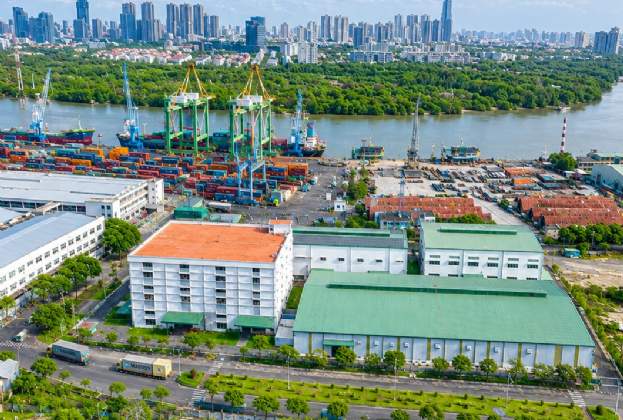
After more than 30 years of development, Tan Thuan Export Processing Zone (TTC) covers 300 hectares and comprises four areas: an export processing zone, an industrial park, a commercial area and the E-Office complex, serving approximately 250 businesses from various countries. With plans to attract high-tech, software, research and development (R&D) businesses and other high-value-added industries, TTC aims to enhance operational management standards across the entire site.

The challenge extends beyond maintaining reliable technical infrastructure across a large industrial development. It also involves coordinating technical operations and services, standardising management procedures and improving transparency in cost and financial control. These measures provide the foundation for meeting occupiers' diverse needs and supporting TTC's long-term development strategy.

6.2. Savills' Solution

To establish an integrated management model, Savills is implementing a comprehensive management solution across several areas:

  • Technical operations: Implementing operational and maintenance plans, monitoring system conditions and identifying potential equipment failures at an early stage to prevent incidents and minimise operational disruption.
  • General services: Coordinating administrative, accounting and facilities management activities to support consistent day-to-day operations.
  • Support services: Coordinating and overseeing security, cleaning and landscaping services to maintain the quality of the environment and shared amenities.
  • Procedures and finance: Standardising operating procedures, establishing regular reporting mechanisms and digitising technical records to support work tracking and improve transparency in management information.
  • Technology: Using Property Cube, a technology platform developed by Savills, to support operational monitoring and centralised data management.

Through this model, both parties aim to establish a safe and stable operating environment, improve management transparency, meet businesses' diverse needs and support TTC's strategy to attract high-tech and other high-value-added industries. This approach enables industrial park owners to manage operations more cohesively across technical systems, services, procedures and finance, particularly as projects expand and occupiers' requirements become increasingly diverse.

CONCLUSION

Industrial park management involves more than day-to-day infrastructure operations; it also focuses on optimising operational performance and protecting long-term asset value. Selecting the right management model, supported by effective oversight and operational processes, helps owners control risks, improve service quality and establish a foundation for the sustainable development of their projects.

FREQUENTLY ASKED QUESTIONS

1. When should industrial park owners consider outsourcing management services?

Owners should consider outsourcing when an industrial park begins accommodating a growing number of occupiers, internal teams struggle to recruit or retain technical staff, or maintenance and incident response costs regularly exceed budget. The period before a project begins operations is also an appropriate time to evaluate and select a suitable management model.

2. Does outsourcing reduce the owner's level of control?

No. Outsourcing transfers responsibility for day-to-day operational implementation to a professional provider, while the owner retains final decision-making authority. To maintain control, the contract should clearly define the scope of work (SOW), key performance indicators (KPIs), service level agreements (SLAs), approval limits and data access rights. This enables the owner to monitor operational performance through regular reports and performance results, while the operator remains responsible for delivering the agreed services.

3. What documents should owners prepare before handing over management?

Before the handover, owners should prepare legal and as-built documentation, technical system drawings, equipment inventories, maintenance records, current contractor agreements, occupier lists and the industrial park's existing management regulations.

Contact Savills' Property Management team to discuss your operational requirements and identify suitable management solutions for different property types. Savills Property Management EXPLORE OUR SERVICES CONTACT US


Recommended articles